

Decentralized Finance: A Rational Future, Not a Hype Trend
Over the past few years, the cryptocurrency market has experienced a true boom: hundreds of new tokens, NFT artworks, and meme coins skyrocketed and then just as rapidly collapsed.
Amid this kaleidoscope of hype and speculation, one sector has demonstrated sustained growth, technological maturity, and real value — decentralized finance, or DeFi. While meme coins and NFTs are often seen as a digital casino, DeFi offers concrete financial tools that have the potential to transform traditional finance.
What is DeFi, and why does it matter?
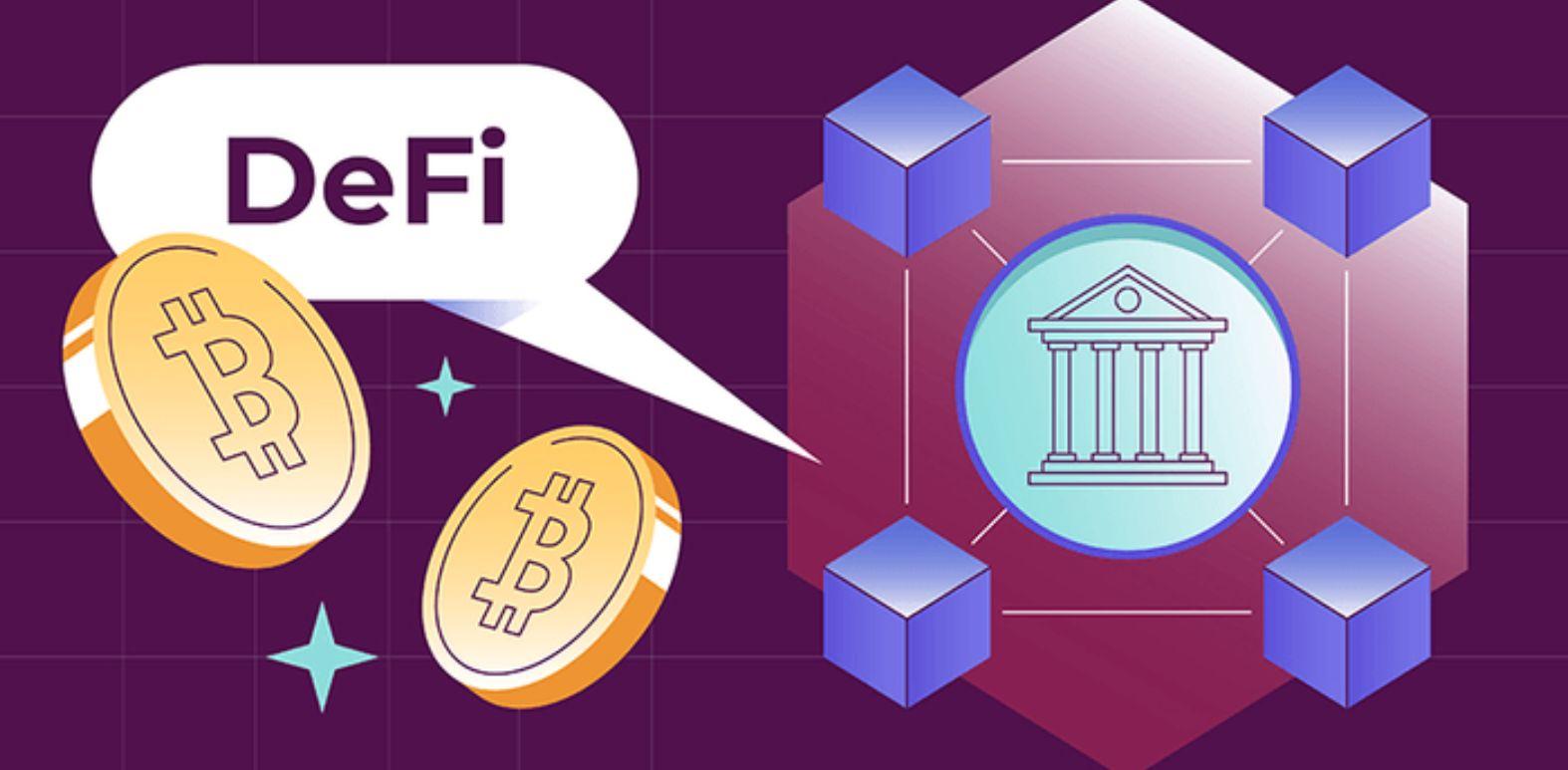
Decentralized finance is an ecosystem of financial applications built on blockchain platforms such as Ethereum, Solana, Arbitrum, and others. It allows users to carry out familiar financial operations — lending, borrowing, currency exchange, insurance, and investing — without relying on traditional banks or intermediaries. Instead of trusting centralized institutions, DeFi relies on transparent code and smart contracts.
Key features of DeFi include:
- Transparency: all transactions are visible on the blockchain.
- Accessibility: no bank or government approval is needed to participate.
- Censorship resistance: transactions cannot be blocked.
- Interoperability: different protocols and applications can work together seamlessly.
Unlike meme coins, which are often created on a whim without any real utility, DeFi protocols serve actual users and solve tangible problems.
Meme coins: digital lottery tickets
Meme coins, such as Dogecoin, Shiba Inu, and PEPE, are cryptocurrencies whose value often relies solely on internet popularity and community support. Their rise is driven by viral marketing, celebrity endorsements, or online jokes. While some investors have made enormous profits, far more people have lost money by buying tokens at the peak of the hype. Meme coins usually lack fundamental value and are not designed for real-world use. They are primarily speculative instruments.
NFTs: more than pictures, but not yet finance
NFTs (non-fungible tokens) emerged as a way to prove the uniqueness of digital assets — images, music, videos, in-game items, etc. In 2021, the NFT market exploded: tokens representing pixelated avatars, monkeys, and other digital objects sold for millions. However, many NFT projects were speculative or even fraudulent, and most do not serve a financial function — they don’t provide liquidity, enable lending, or manage protocols.
This doesn’t mean NFTs have no future — they have potential in gaming, digital identity, ticketing, and collectibles. But unlike DeFi, they are not yet a mature financial tool.
DeFi: real applications and innovation
While meme coins and NFTs attract attention with headlines, DeFi continues to grow and integrate into the economy. Examples include:
- Uniswap, Curve, PancakeSwap: decentralized exchanges (DEXs) allowing millions to swap tokens without intermediaries.
- Aave, Compound: lending protocols enabling users to borrow and lend without banks.
- MakerDAO: decentralized system for creating the stablecoin DAI, backed by digital assets.
- Yearn Finance: platform for automated yield management from staking and farming.
- Chainlink: protocol connecting DeFi to real-world data (oracles).
These projects already manage billions of dollars, generate returns, and are open to anyone with internet access and a crypto wallet.
Risks and challenges in DeFi (but solvable)
DeFi is not risk-free. Issues include hacker attacks on smart contracts, coding errors, token instability, and regulatory uncertainty. However, unlike meme coins and most NFT projects, DeFi has developer teams, auditors, investors, and communities working to improve the infrastructure. New solutions continue to emerge: multi-signature protocols, community-governed DAOs, more reliable auditors, and enhanced security standards.
Technology vs. noise
DeFi is more than a trend — it is a full-fledged alternative financial system based on open code, algorithms, and transparency. Unlike meme coins and NFTs, whose value is often illusory or subjective, DeFi provides tools that can already be used for real-world purposes: from earning yield to cross-border transfers and micro-lending.
Meme coins and NFTs may generate excitement, but it fades. DeFi is infrastructure that can last decades.
Conclusion: Meme coins are entertainment, NFTs are experiments, but DeFi is the foundation.